Activities
Huh Jeong-Won’s "A dream turned into water bubbles" and disappeared Selected for the Collection of Gangneung Museum of Art
2016
Gangneung Museum of Art
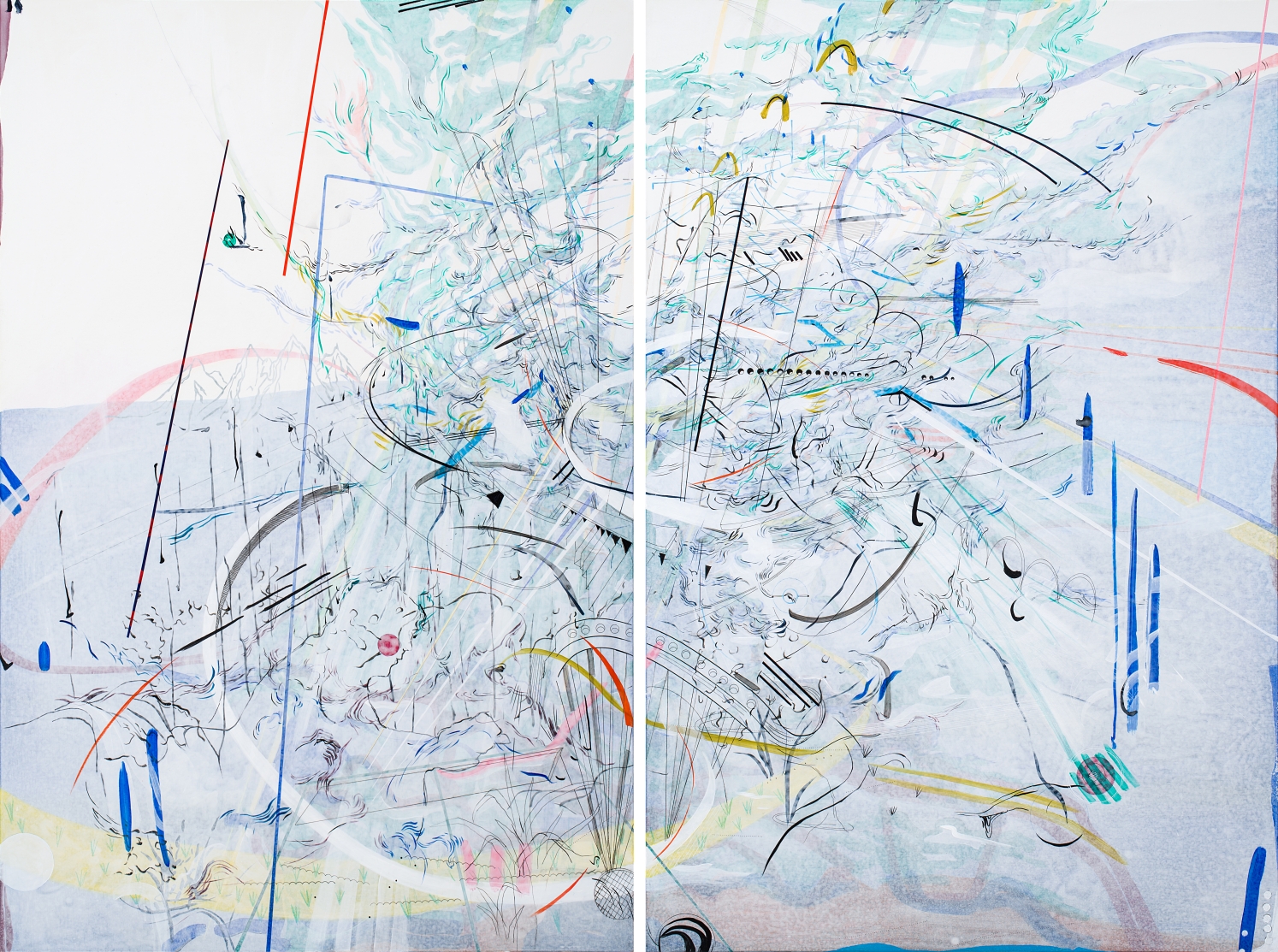
A dream turned into water bubbles and disappeared, 2015, Acrylic on canvas, 145 x 194 cm ©Huh Jeong-Won
Artist Description
Huh Jeong-Won (b. 1970) was born in Daegu. She majored in Western painting at Ewha Womans University, received an M.A. in Art Education from the Graduate School of Education at Gangneung-Wonju National University, and obtained a Ph.D. in Plastic Arts from Ewha Womans University.
She has received awards at major national art exhibitions, including the Korea National Art Exhibition, Dong-A Art Exhibition, and Shin Saimdang Art Exhibition. She is currently a professor in the Department of Fine Arts and Design at Gangneung-Wonju National University.
Her practice explores the hybridity of time and space experienced in everyday life, relationships between objects and individuals, and fluid, incomplete memories. She works across various media—including painting, installation, drawing, and video—through abstract and experimental approaches.
Work Description
The artist pursues what she defines as “formative-psychological sketching”, which aims to move beyond the objective depiction of natural scenery and instead materialize subjective, immaterial, and invisible realms. A dream turned into water bubbles and disappeared (2015) is an abstract rendering of a landscape observed from inside a moving vehicle on the Gangneung–Seoul expressway. After photographing the passing scenery from within the car, the artist reconstructs the image through layered applications of color and drawing, thereby articulating the flow of time and space.
‘The scenery before my eyes, the road receding behind me, and the objects I encounter float within my mind, intermingling to form an imagined landscape. The experience of movement—encountering countless scenes and objects—causes them to blend and overlap across spaces according to speed and the passage of time. Consequently, this landscape is realized as an abstraction in which overlapping objects and multiple scenes are mixed to the point that their original forms become indiscernible.’— from the artist’s note
References
Activities
Activities
Huh Jeong-Won and Pianist Jung Yerim Receive Park Junyong Young Arts and Culture Award
2013.12.27